Hyundai Tire Rotation Service Available In Chicago, IL | McGrath City Hyundai
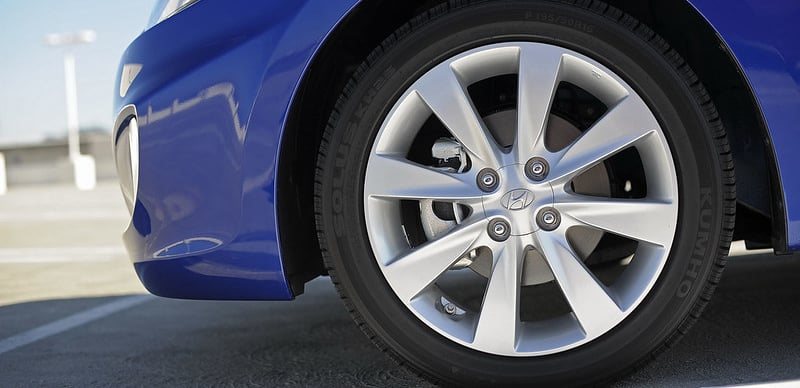
Regular tire maintenance is a must if you want to keep your vehicle running safely. Tire rotation is an important part of that maintenance. In this article, we'll cover what tire rotation is, how it's done, how often it should be carried out, and why it should be done by certified professionals at a licensed dealership.
The Basics of Tire Rotation
Tire rotation is the practice of alternating the positions of tires within a set on a vehicle to optimize their tread wear patterns. Patterns of tire rotation vary based on the tire type, vehicle type, drive system format, and usage patterns. Tread wear refers to the wearing away of the grooved part of the tire set that makes contact with the road.
How Do Drive System Type and Vehicle Usage Patterns Influence Tread Wear?
Tire wear is heavily influenced by the type of drive system a vehicle has. Rear-wheel drive, front-wheel drive, four-wheel drive, and all-wheel drive are the standard drive types for civilian vehicles that are sold in America. Rear-wheel-drive vehicles experience tire tread wear more heavily on the rear pair of tires, whereas front-wheel-drive vehicles experience the same more heavily on the front pair.
All-wheel-drive vehicles have tires that tend to wear down more evenly, but they still need to be rotated regularly. Vehicles with four-wheel-drive systems have the most unpredictable wear patterns since they tend to be used off-road under far more variable terrain conditions than would be found on-road.
The more heavily a vehicle is used, the more regularly the tires will need to be rotated to maintain uniform tread wear and optimize traction levels. There are three kinds of driving that greatly accelerate tire tread wear: sport driving, off-road driving, and towing. However, vehicles that don't see regular use won't require their tires to be rotated nearly as often.
How Often Is Tire Rotation Required?
Tire rotation should be carried out every 3,000 to 5,000 miles for cars, every 7,500 miles for trucks, and every 5,000 miles for SUVs. Sport vehicles’ tires have more rigid rubber and need to be rotated every 5,000 to 7,500 miles. Vehicles with specialized off-road tires need to have them rotated every 3,000 to 5,000 miles when they're used regularly or every 2,000 to 4,000 miles when they're used heavily.
Which Tire Rotation Patterns Match What Drive Types?
Different drive types require different patterns of tire rotation. Rear-wheel-drive, all-wheel-drive, and four-wheel-drive vehicles require either the rearward cross pattern or the X-pattern. Rearward cross takes the front tires and places them on the opposite sides at the rear while moving the rear tires directly forward. The X-pattern moves each tire to the opposite side and opposite end from its original position.
Our service techs are trained to recognize which pattern will be most effective for your vehicle based on the wear patterns of the tires on vehicles with these three drive types. Front-wheel-drive tires rotate in the forward cross pattern. This pattern moves the front tires straight back and the rear tires forward and to the opposite side.
The Costly Consequences of Skipping Tire Rotation
Tires with warranties attached require regular tire rotation along with other forms of tire maintenance as part of their warranty terms and conditions. Tire warranties are voided in the event that the required maintenance schedule isn't adhered to. Many tire warranties are also voided if a covered tire is patched or plugged by the owner. Patches and plugs are required more often on tires that wear down more quickly as a result of a lack of proper rotation.
Warranties aside, tires that don't see scheduled rotation will experience uneven wear. This will eventually result in tire slippage due to traction loss in tire tread areas that are more worn than their counterparts on the other wheels. Eventually, tires that are not rotated regularly and suffer the resulting chaotic wear patterns will burst, which could cause a catastrophic loss of vehicle control.
It may seem like a rotation or two can be skipped, but the above shows how skipping them can lead to far more expensive results. Traction loss or tire bursting can lead to collisions because of a loss of vehicle control, resulting in hefty repair fees and possibly equally hefty medical bills.
You'd be wise to lean toward the course of action that maximizes your safety, your passengers' safety, and the safety of everyone else on the road. All drivers should stick to their vehicle's owner's manual tire rotation schedule or have them rotated more often than required if they see heavy use.
Have Your Tires Rotated at McGrath City Hyundai
It's best to have tire rotation done by professionals when the time comes so that the work is done right every single time. The service center team here at McGrath City Hyundai is trained to properly execute the rotation of all kinds of tires on all kinds of vehicles. The team has also carried out a stupendous number of tire rotations, so you can be sure they can do the work quickly and accurately.
It's also a good idea to have your Hyundai tires rotated with us because of our extensive tire inventory. Our service pros may find that one of the tires on your vehicle is compromised and needs replacement. While a small shop would likely have to order the new tire, requiring a substantial wait, we keep a wide range of tires in stock and are far more likely to be able to carry out the work immediately.
Come in and see us at McGrath City Hyundai at 6750 W. Grand Avenue in Chicago when the time comes to have your valued vehicle's tires rotated. Our service center is open Monday through Friday from 9 a.m. to 8 p.m. and on Saturday from 9 a.m. to 6 p.m. It's always closed on Sundays. Please feel free to contact us and set up a service appointment or come in at your convenience. Patrons without appointments will be served on a first-come, first-served basis.